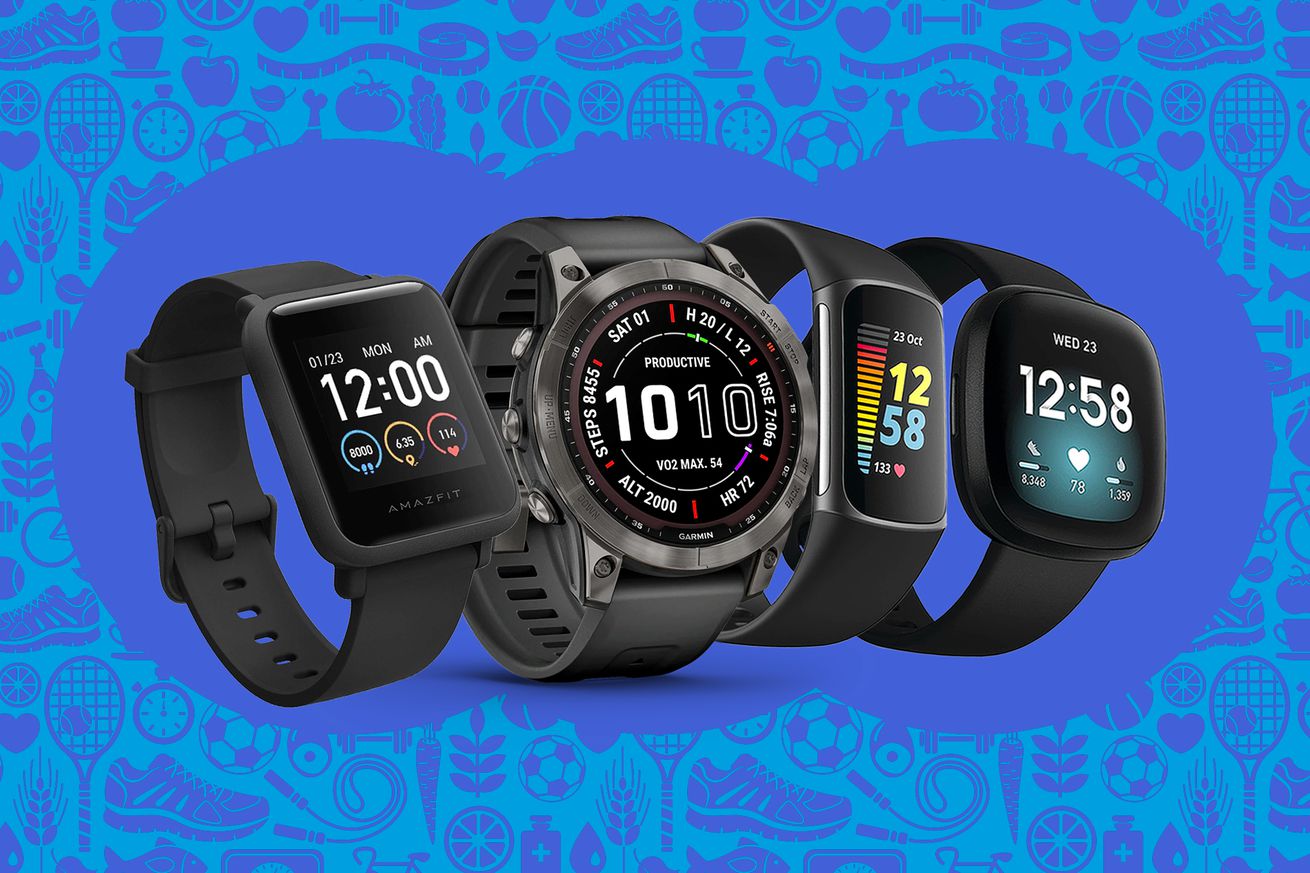
From simple fitness bands and rugged sports watches to rings, these are the best trackers you can get.
Fitness trackers have come a long way from the simple bands that tracked steps and little else. Modern trackers can monitor everything from your heart health to how well you’ve recovered from a hard bout of training. Even flagship smartwatches, which used to be lackluster trackers, have become pretty adept workout companions. Whatever your fitness goals are, there’s probably a fitness tracker that can help you achieve them.
Compared to some other gadgets, wearables are incredibly personal, which means there are a few extra considerations you’ll have to take into account before reaching for your wallet. It makes it hard to say that any one fitness tracker is the best for everyone. Thankfully, the best thing about fitness trackers in 2024 is that there’s enough variety to fit into every kind of lifestyle.
Right now, we’re heading into the holiday shopping season. A little patience goes a long way this time of year. Retailers and companies alike will be trying to get rid of old stock, meaning discounts galore ahead of Black Friday. If you don’t need the latest and greatest, it’s a good time to snag last year’s models in nicer materials.
Best fitness tracker overall
Size: 46mm w/ 22mm straps / Weight: 34g / Battery life: Up to 14 days / Display type: OLED touchscreen / GPS: Dual-frequency and six GNSS systems / Connectivity: Bluetooth, Wi-Fi / Water resistance: 5ATM / Music storage: 2.3GB
The Amazfit GTR 4 punches way above its weight. It includes a whole array of features you’d expect to see on much pricier wearables, like a bright OLED screen, blood oxygen monitoring, sleep stage tracking, stress tracking, Amazon Alexa compatibility, and an offline digital assistant. It’s also got a native camera remote and a handy Pomodoro timer built in. And for outdoor fitness enthusiasts, the GTR 4 also has multiband GPS for more accurate GPS tracking in challenging environments. You can even import GPX routes from sites like Strava and Komoot. The GTR 4 takes a more holistic approach to health, trading in steps for PAI points to gauge whether you’re getting the recommended 150 minutes of moderate activity per week.
/cdn.vox-cdn.com/uploads/chorus_asset/file/24188485/226398_Amazfit_GTR_4_AKrales_0023.jpg) Photo by Amelia Holowaty Krales / The Verge
Photo by Amelia Holowaty Krales / The Verge
For smart features, the GTR 4 has all the basics: push notifications, quick text replies on Android, alarms, timers, and the ability to make and take calls over Bluetooth. The only thing the GTR 4 is really missing is contactless payments, but it more than makes up for it, given the expansive feature set and battery life. It lasts about 10–14 days on a single charge with normal use and about a week with heavy usage. It may not have the brand recognition of a Fitbit, but since Google nerfed both the Versa 4 and Sense 2, you might want to overlook that. Plus, the GTR 4 doesn’t have thick bezels like either of those watches. Watchfaces on the OLED display are crisp, and animations are smooth. When you consider that Amazfit watches are often on sale, it’s a no-brainer.
Read my full review of the Amazfit GTR 4 here.
Best fitness watch for casual users
Sizes: 40mm w/ 20mm straps / Weight: 38g / Battery life: Up to 11 days / Display type: OLED touchscreen / GPS: All-systems GNSS / Connectivity: Bluetooth, Ant Plus / Water resistance: 5ATM / Music storage: 4GB (for Music Edition)
The $250 Garmin Venu Sq 2 is the watch I recommend for anyone looking to replace their aging Fitbit Versa 2, 3, or 4. It’s got a similar look and vibe, with a much nicer OLED display and longer battery life.
Garmin is known for its comprehensive fitness tracking, and that’s not an exception here. Of course, you get the basics, like steps and calories burned, but you get a whole lot more, too. There’s built-in GPS for tracking walks, runs, and bike rides, as well as plenty of other sports profiles like yoga and strength training. For smart features, you get push notifications, timers, contactless payments, and a bunch of safety features like Garmin’s Incident Detection, which is its take on fall detection. (You will need to carry your phone with you, however, as this doesn’t have LTE.)
/cdn.vox-cdn.com/uploads/chorus_asset/file/24259063/226428_Garmin_Venu_Sq_2_AKrales_0049.jpg) Photo by Amelia Holowaty Krales / The Verge
Photo by Amelia Holowaty Krales / The Verge
If you want the option of onboard music, you can shell out $50 extra for the Music Edition, which comes with enough storage for about 500 songs. I wouldn’t recommend it, however, as you’ll most likely have your phone on you since this isn’t a true standalone watch.
What I like most about this watch, however, is it’s one that you can grow with. On top of recovery metrics and sleep tracking, it also has Garmin Coach — a built-in, free training program for beginner and intermediate-level runners hoping to tackle a 5K, 10K, or half marathon. For health tracking, you can monitor heart rate, blood oxygen, intensity minutes (how many minutes of moderate exercise you get per week), stress, hydration, respiratory rate, and menstrual cycles. And the best part is Garmin doesn’t lock any of this behind a paywall.
One note: there is a Venu 3, which adds a newer heart rate sensor and nap detection. I liked it quite a bit, and it ticks off a lot of the right boxes — except for price. It’s $450, which puts it outside what I’d consider ideal for casual users. The other option is Garmin’s Forerunner 165 — it’s a $249 budget training watch that’s quite similar to the Venu Sq 2 feature-wise, albeit with a sportier vibe. Basically, go with what you find on sale. I firmly believe older models are still a good choice if all you want is the fitness-tracking basics. This is especially true since newer software updates often make their way to older Garmins. Garmin users also tend to hang onto their devices for a good while. Strava’s 2023 year-end survey found that the most popular smartwatch among its users was an eight-year-old Garmin!
Read my full review of the Garmin Venu Sq 2.
Best for serious outdoor athletes
Sizes: 7S Pro: 42mm w/ 20mm straps; 7: 47mm w/ 22mm straps; 7X: 51mm w/ 26mm straps / Weight: 7S Pro: 63g (Solar), 58g or 65g (Sapphire Solar, titanium or stainless steel); 7: 79g (Solar), 73g (Sapphire Solar); 7X: 96g (Solar), 89g (Sapphire Solar) / Battery life: 7S: up to 11 days, 14 w/ Solar; 7: up to 18 days, 22 days w/ solar; 7X: up to 28 days, 37 w/ solar / Display type: MIP touchscreen / GPS: All-systems GNSS and dual-frequency GPS / Connectivity: Bluetooth, Ant Plus, Wi-Fi / Water resistance: 10ATM / Music storage: Up to 32GB
Garmin’s flagship Fenix 7 series is no joke, and the Fenix 7 Pro lineup takes it up a notch. It’s got built-in multiband GPS, solar charging on all models, the option of touchscreen or button navigation, topographical maps, and oodles upon oodles of data. Plus, every Fenix 7 Pro model has a hands-free LED flashlight, an upgraded heart rate sensor, and an improved memory-in-pixel display that’s slightly easier to read in low lighting.
Garmin wearables are also known for providing extensive in-depth metrics, and the Fenix 7 Pro lineup is no exception. You get excellent recovery metrics as well as helpful training guides and coaching programs. The best part is that Garmin doesn’t charge extra for those features. That’s good news, as these are expensive watches.
I appreciate how quickly these Fenix 7 watches can pick up a GPS signal. That’s a must if you’re training in the dead of winter. These watches can also take a beating. All models are built to military-grade standards and feature up to 10ATM of water resistance. That means they’re more than capable of a dunk in the ocean.
/cdn.vox-cdn.com/uploads/chorus_asset/file/24806204/236729_Garmin_Fenix_7S_Pro_AKrales_0175.jpg) Photo by Amelia Holowaty Krales / The Verge
Photo by Amelia Holowaty Krales / The Verge
Although the screen is brighter, MIP displays still aren’t my absolute favorite — the OLED on the Garmin Epix 2 and the Epix Pro are much easier on the eyes. It’s admittedly tough to pick between the Fenix 7, Fenix 7 Pro, Epix 2, and Epix Pro lineups — especially now that the Epix Pro also has great battery life, the LED flashlight, and now comes in multiple sizes. What it boils down to is whether you prioritize a brighter display, longer battery life, or price.
Personally, I prefer the Epix Pro for better readability, but the Fenix 7 Pro is the better choice if this is your first introduction to Garmin’s platform. You’ll get better battery life, the same LED flashlight, all the same training features, and a lower starting price. (You can also check out our Garmin buying guide if you’d like even more alternatives.)
Technically, there’s a new Fenix 8 series on the block. That said, I still think the standard Fenix 7 or 7 Pro lineup is the better overall value. The Fenix 8 adds diving features and voice assistant capabilities, but it also ups the standard Fenix 7’s starting price of $650 by an additional $350. That’s tough to swallow, especially since holiday season is upon us and retailers may offer discounts on older models to get rid of existing inventory.
Read my full review of the Garmin Fenix 7S Pro.
Best non-wrist tracker
Sizes: 12 proprietary sizes, 4–15, sizing kit needed / Weight: 4–6g (depends on size) / Battery life: Up to seven days / Display type: None / GPS: None / Connectivity: Bluetooth / Water resistance: Up to 328 feet / Music storage: None
The vast majority of fitness trackers are worn on the wrist, but the $349 Oura Ring isn’t. The smart ring is a good option for people who are looking for something a little more discreet. It’s also less distracting than some other wrist-based options, as it lacks a screen and doesn’t mirror push notifications from your phone.
The new Oura Ring 4 isn’t functionally that much different from the previous Gen 3. It’s slimmer, features a new all-titanium design, has improved battery life, and has a new sensor algorithm that Oura says is more accurate. None of the new software features are gatekept to the Ring 4, so Gen 3 owners shouldn’t feel the need to upgrade unless their ring no longer lasts more than two days on a single charge. That said, the fourth-gen ring has an expanded size range spanning from 4 to 15. If you felt your Gen 3 was a bit snug or couldn’t find a size that fit right, you may have a better option now.
/cdn.vox-cdn.com/uploads/chorus_asset/file/25665134/247314_Oura_Ring_4_AKrales_0022.jpg) Photo by Amelia Holowaty Krales / The Verge
Photo by Amelia Holowaty Krales / The Verge
While smaller than your average wearable, the Oura Ring still tracks a ton of metrics, including heart rate variability, body temperature, blood oxygen, all-day heart rate monitoring, and cycle tracking. Since launching, the Oura Ring has also added activity tracking, blood oxygen levels, chronotypes to help visualize your circadian rhythms, a social feature called Circles, improved stress tracking, cardiovascular age and capacity metrics, and even an AI chatbot (in beta). It’s also rolled out a new sleep stages algorithm that it claims is more accurate than before. The app has also been entirely revamped to better organize all these new features and metrics.
The Oura Ring tracks typical metrics — such as steps and calories burned — but its main focus is sleep and recovery. Each day, you’re given three sets of scores for your readiness, sleep, and activity. It’s a simple, holistic look at your overall wellness and an ideal pick if you want a more hands-off experience with your data.
If you’ve got a Samsung Galaxy Watch, you may want to consider the $399.99 Galaxy Ring. It’s a bit more exp
