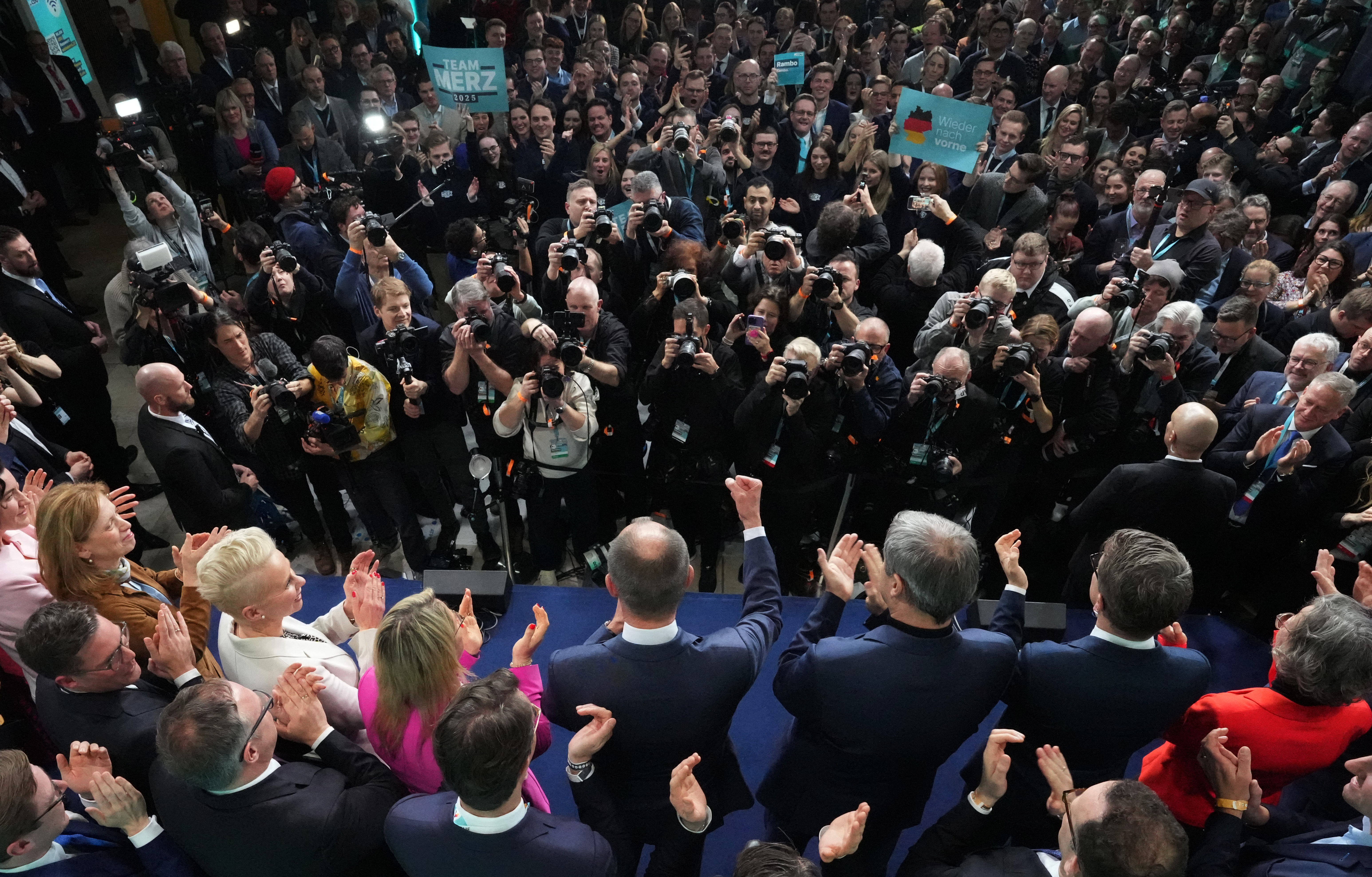
Germany's CDU/CSU Secures Election Victory, AfD Surges
In a pivotal election, Germany's opposition conservatives CDU/CSU have triumphed, paving the way for their leader Friedrich Merz to become the next chancellor. The far-right Alternative for Germany (AfD), securing their highest-ever result, has come in second, according to projections. This outcome sets the stage for intricate coalition negotiations.
Analysts' Perspectives
Coalition Complications and Blockades
- Analysts express concern over the potential need for a three-party coalition, as it could grant parties from the political fringes significant influence, allowing them to obstruct constitutional changes.
- This could hinder efforts to loosen the constitutional debt brake, limiting the government's ability to increase spending on crucial areas like military and infrastructure.
Economic Policy Differences
- While a future coalition may agree on increased infrastructure funding, parties hold varying opinions on tax, social, and climate policies.
- This disparity dampens prospects for substantial economic policy shifts, which have been deemed essential after years of stagnation.
Coalition Scenarios and Economic Considerations
- Regardless of the specific coalition composition, analysts anticipate income and corporate tax cuts, reduced social benefits, and increased defense spending.
- A debt brake reform is less likely due to the potential lack of a necessary two-thirds majority among the main supporting parties (CDU, SPD, Greens).
- A three-party coalition involving the FDP may prioritize tax relief, immigration control, and defense spending, but could hinder fiscal stimulus.
Collaboration Imperative for Progress
Despite the complex coalition negotiations, analysts emphasize the need for cooperation among parties to address challenges and prevent the AfD from gaining further strength.
CDU-SPD Cooperation Potential
- A CDU-SPD coalition could foster economic growth if they approach policy with boldness.
- The CDU could prioritize supply-side measures, such as corporate tax cuts and bureaucracy reduction, while the SPD could focus on infrastructure investment.
- This division of responsibilities could facilitate an economic turnaround if executed effectively.
Market Implications and Uncertainty
- Exit polls suggest a CDU/CSU-SPD majority government, which could provide stability.
- The AfD's performance has allayed fears of a blocking majority that could hinder policy implementation.
- However, uncertainty remains regarding the debt brake's potential revision and the ultimate composition of the coalition.
Tags:
News
